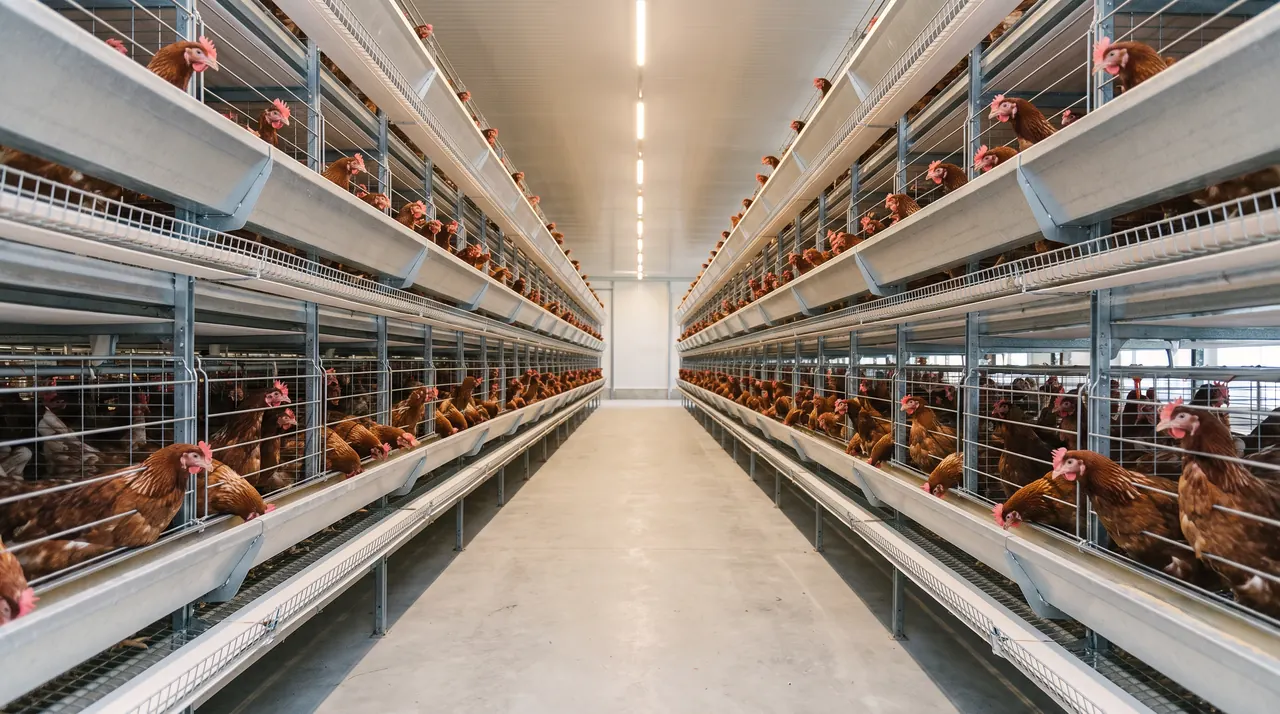
Solution · Stacked layer cages
Belts for stacked layer cages
01 / System
The system
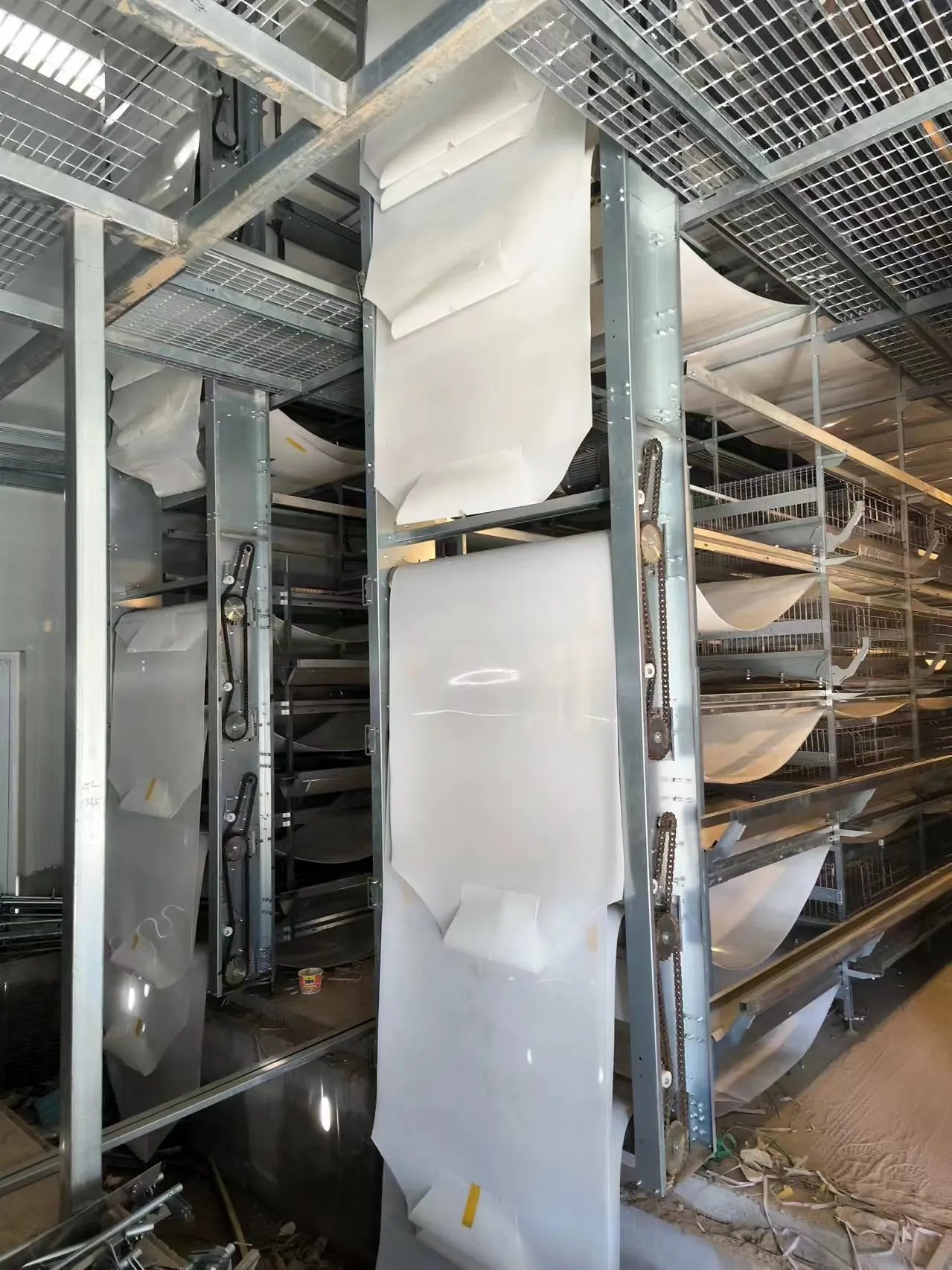
China’s 2023 MARA guidance defines 4–12 tier stacked housing as vertical (multi-tier) production and calls for belt-type manure removal on every tier, with longitudinal, lateral and inclined belts, so manure never reaches the floor. A set has four parts: longitudinal belts (one per tier), lateral belt, inclined belt, and drive & control.
02 / Example
Example: 8-tier house
| Section | Typical material | Quantity | Notes |
|---|---|---|---|
| Longitudinal (in-cage) | PP | 8 per row | Common thickness 1.0 / 1.2 mm; width to cage |
| Lateral | Endless rubber (PVC also used) | 1 per house end | Width/length to end-of-row plan |
| Inclined | Endless rubber | 1 | Angle from height and run |
| Egg belt | PP | 8 per row | Width to egg channel |
“Typical” means common industry practice, not a fixed rule; your system drawing decides.
03 / Load
More tiers, more load
MARA cites roughly 30–60 birds/m² for 4–8 tiers and 75–90 birds/m² for 10–12 tiers. The lateral belt receives manure from every tier, so size the lateral, inclined and drive for the whole house, not one row.
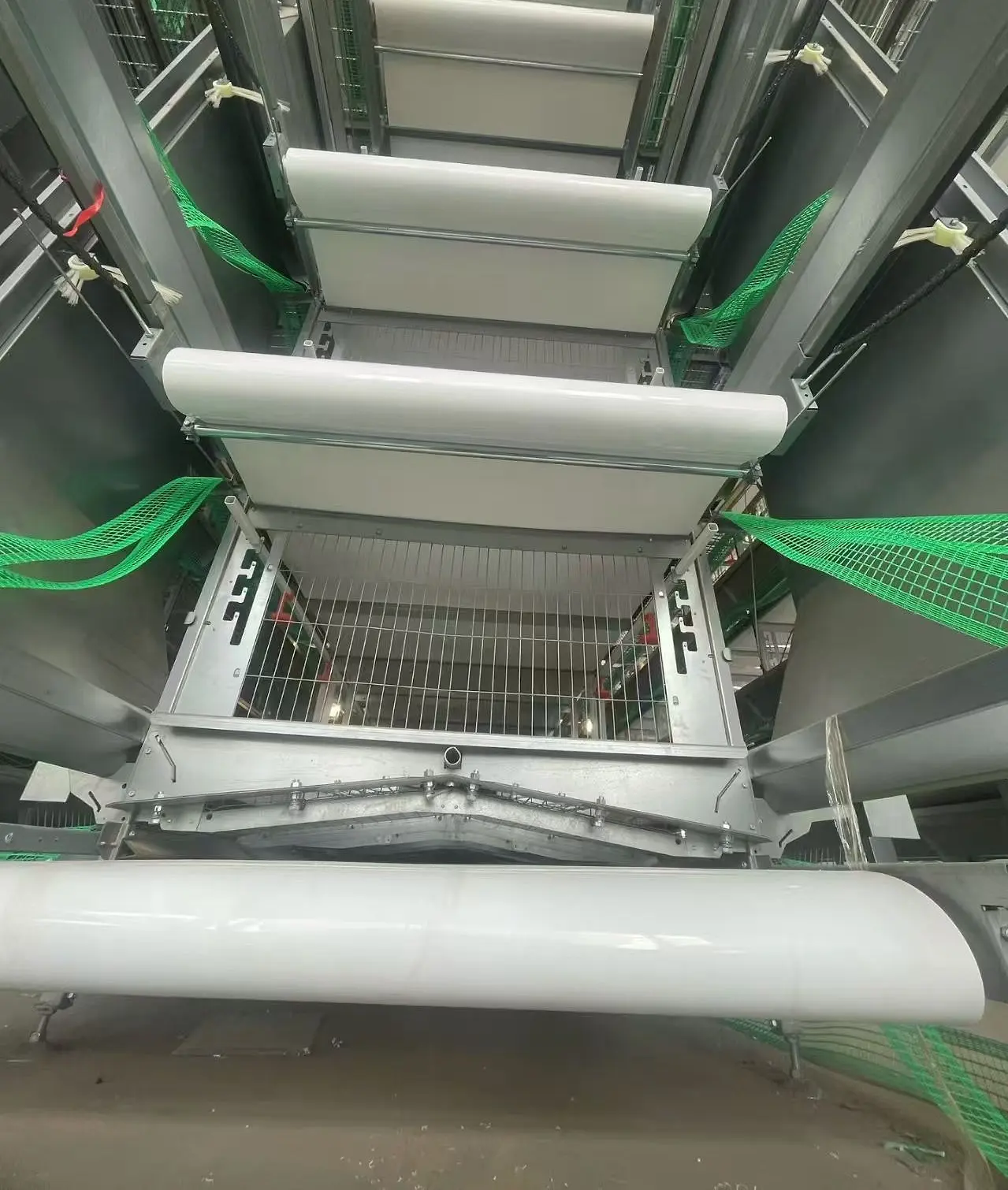
Installed
In the house
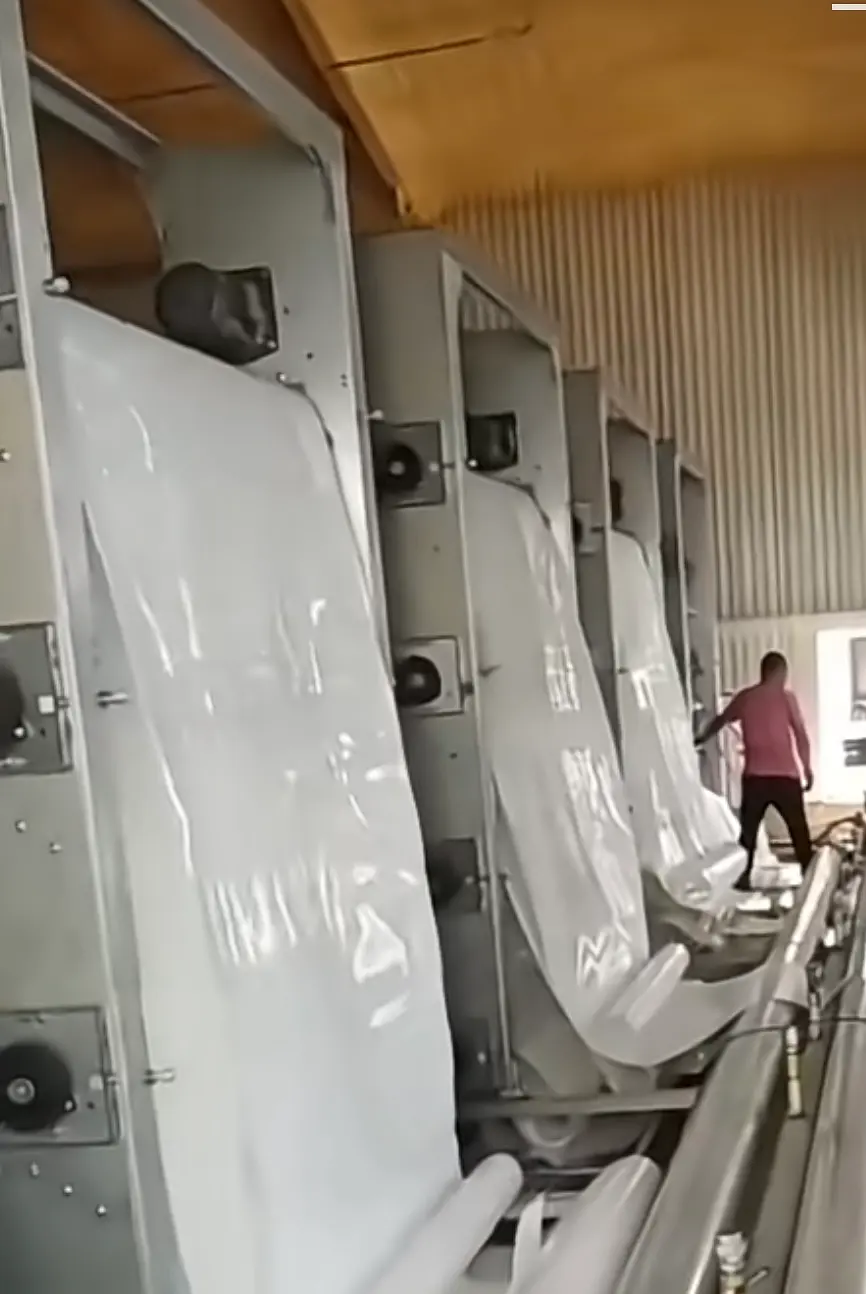
Send a photo of your house — we size all three sections
Next
Related products
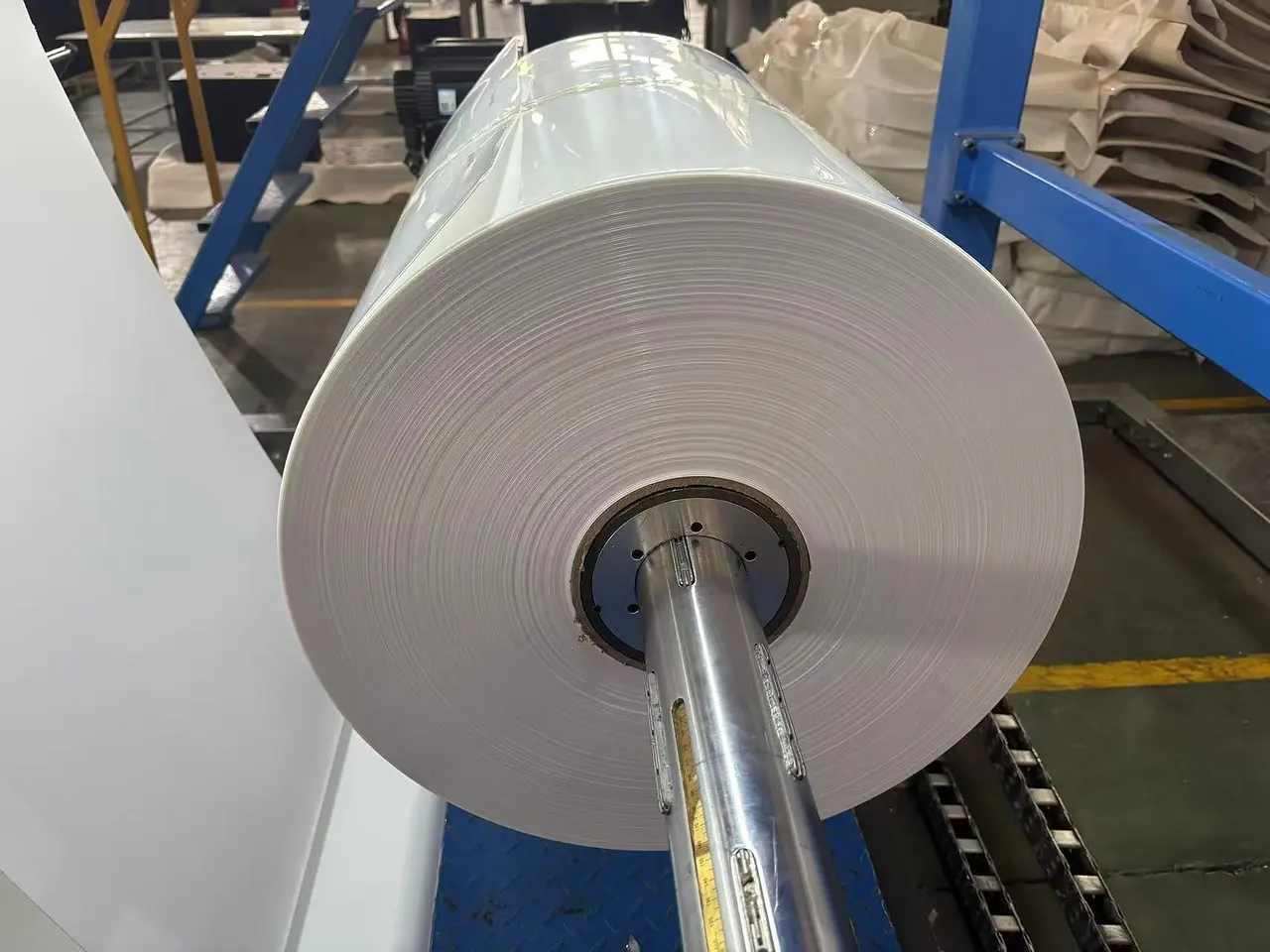
- 01 PP manure belt Main product Our main product. Fits any poultry cage system. Light and resistant to manure. Supplied in rolls.
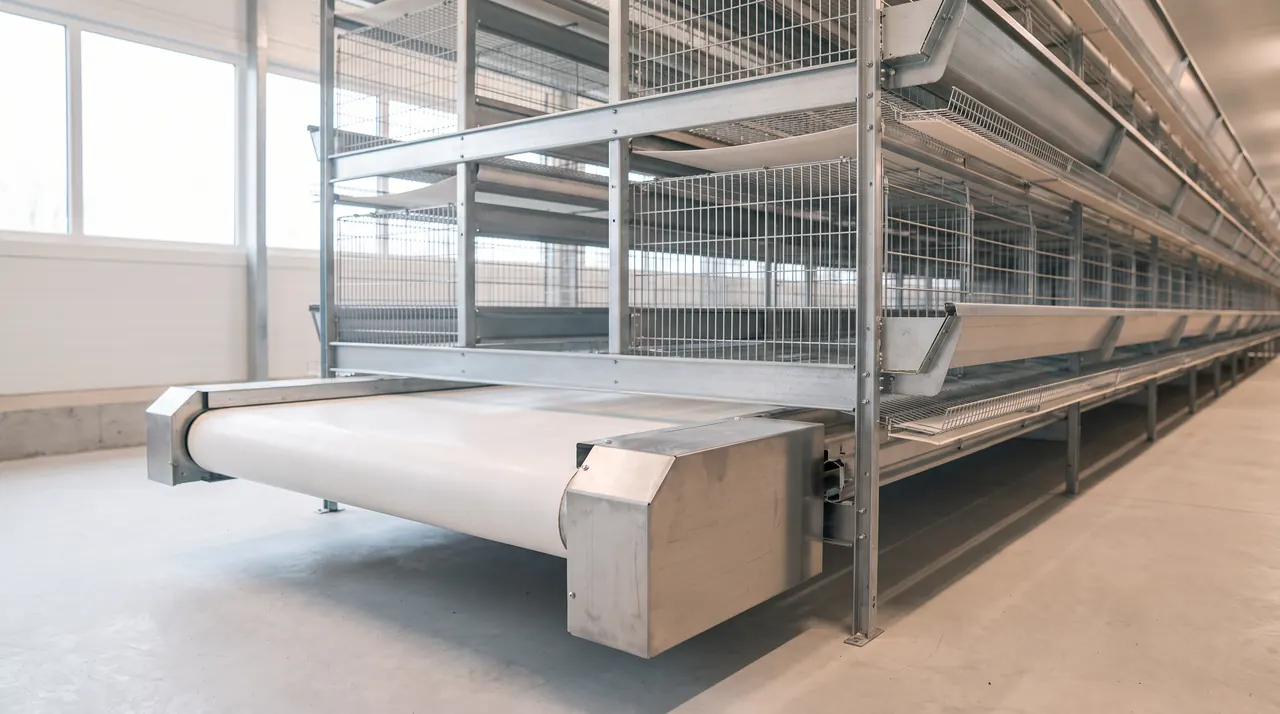
- 02 PVC cross conveyor belt Row end · Cross belt The cross belt that collects manure from all tiers at the row end.
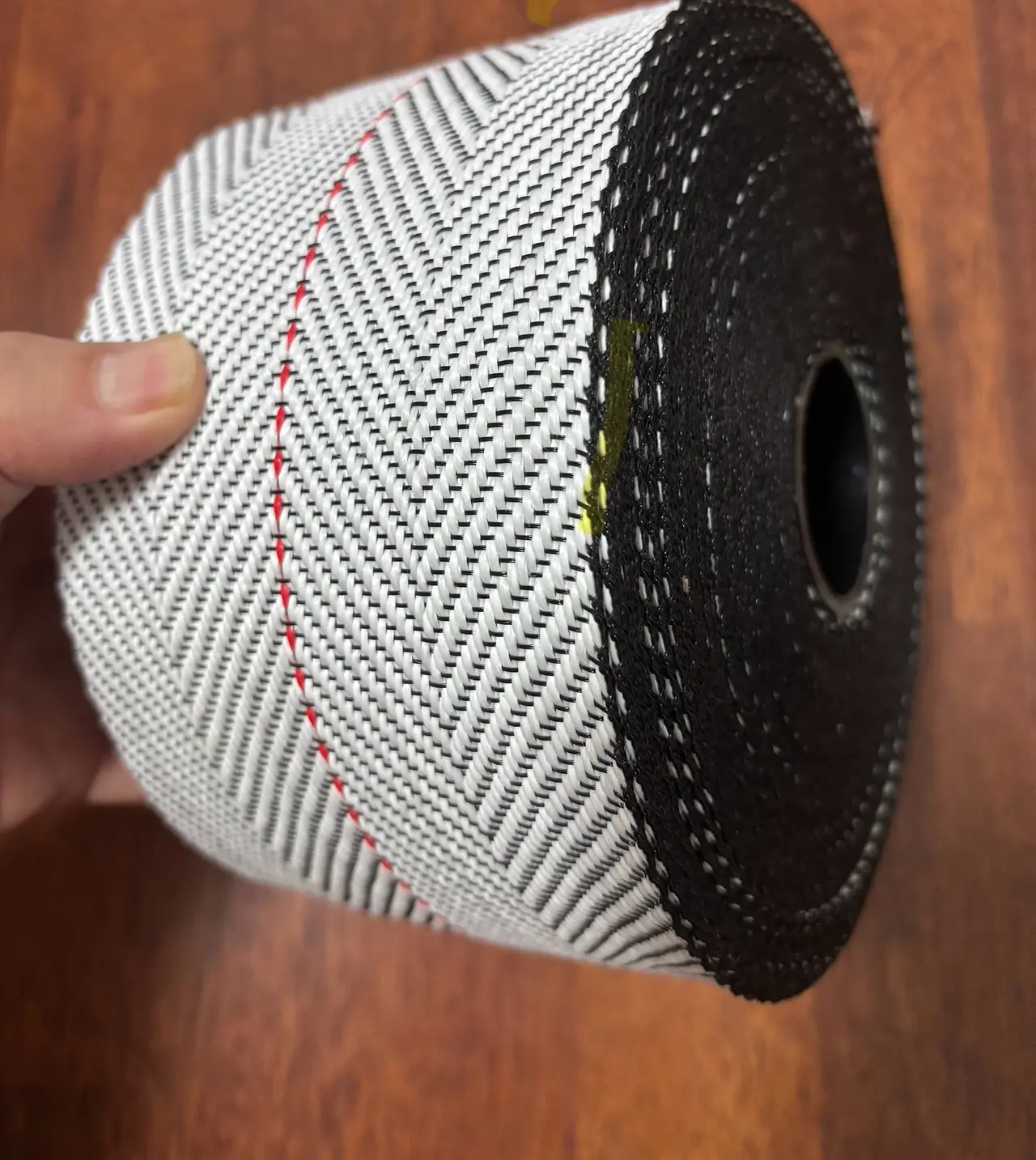
- 03 Egg belt Belt series Polypropylene egg belts matched to your cage’s egg channel.
FAQ
Questions buyers ask
At how many tiers is a manure belt required?
We know of no tier-count mandate. MARA’s 2023 guidance (advisory) calls for belt manure removal for 4–12 tier vertical systems.
How much load must a longitudinal belt carry?
The Nanjing local standard DB3201/T 1024—2020 specifies not less than 4.8 kg/m². It is a local standard, not a national figure.